goTop

Open Banking: Opportunities, Risks, and an Economic–Information Perspective

whatIsOpenBankingBlogsTitle

In the age of the digital economy, money is no longer merely static figures recorded in bank ledgers. It has become data in motion: flowing between applications, being reconfigured into smarter services, and moving closer to people’s real financial needs. From this shift emerged the concept of open banking—one of the quietest transformations in form, yet one of the deepest in impact, reshaping the global financial system.

In simple terms, open banking is a regulatory and technical framework that allows banks, with the customer’s explicit consent, to share financial data with trusted third parties through Application Programming Interfaces, or APIs. The purpose is not to expose accounts, but to unlock the hidden value within financial data, enabling consumers to compare offers, manage their money more intelligently, and access personalized financial services that go beyond the boundaries of traditional banking.

This transformation did not emerge in isolation. According to estimates by the World Bank, more than 70% of adults worldwide now have bank accounts, yet a large share of them still use only basic financial services. Open banking steps into this gap, bridging the distance between simply “having an account” and achieving genuine financial empowerment.

Perhaps the essence of the idea is best captured by Austrian economist Joseph Schumpeter, who said:

“Economic development does not come from improving what already exists, but from breaking existing patterns and creating new combinations.”

Open banking is precisely this “quiet breaking of patterns.” It does not eliminate banks, but redefines their role. It does not stand against regulation, but grows within it. In a world where financial innovation is accelerating, the question is no longer whether open banking will spread, but how it will reshape our relationship with money.

How Does Open Banking Work? And Why Have Countries Adopted It?

At first glance, open banking may seem like a complex technical concept. In reality, however, it rests on a simple principle:

Financial data belongs to the customer, not exclusively to the bank.

How Open Banking Works in Practice

Open banking operates through three interconnected pillars:

  • The Customer
    The customer is the central point of the system. No data can be shared without the customer’s explicit consent, which must also be limited to a defined period.
  • The Bank
    The bank holds the data—accounts, transactions, balances—and makes it available through secure APIs.
  • The Third Party: FinTech Companies
    The third party receives the data and builds services on top of it. These services may include expense management applications, loan comparison tools, income verification, IBAN verification, or even direct payments without using cards.
    Once the customer grants permission, the data is transferred instantly and securely in encrypted form, without unauthorized copying or storage. This is the key difference between open banking and older practices that relied on sharing passwords—a method now widely rejected by regulators.
Why Have Governments Adopted This Model?

The motivation behind adopting open banking has not been purely technical. It is fundamentally economic and regulatory.

In many markets, major banks had become almost like “closed gates,” limiting competition, slowing innovation, and keeping data locked inside institutions.

In Europe, regulatory intervention was clear and direct. The European Union introduced PSD2, requiring banks to open customer data—with customer consent—to licensed service providers under the supervision of regulatory bodies such as the UK’s Financial Conduct Authority.

The result was rapid adoption of open banking. In the United Kingdom alone, the number of users exceeded 7 million within only a few years, alongside continuous growth in the number of applications and services built on this model.

In Saudi Arabia, however, what we are witnessing is not merely the importation of a global experience. Rather, the Kingdom is building a more mature model from the outset.

The move toward open banking has come within a clear and gradual regulatory framework, driven by a broader vision to develop the financial sector, promote innovation, and improve the efficiency of financial services.

This shift has coincided with regulatory updates to the licensing framework for FinTech companies operating in open banking, reflecting a clear direction toward:

  • Regulating financial data sharing in a controlled and secure manner
  • Raising security and compliance standards
  • Enabling new business models built on integration between entities
  • Promoting fair competition and encouraging market innovation

This reflects a deliberate transition from a “closed banking” model to an “open financial ecosystem,” where data is not opened randomly, but within a regulatory structure that balances innovation with protection.

In short, if Europe began by breaking down barriers, Saudi Arabia is building a more open financial system from the ground up—one that is organized, sustainable, and prepared for long-term growth.

The Economic Logic Behind Open Banking:

From an economic perspective, open banking addresses three long-standing problems:

  • Weak Competition: This occurs when data is locked inside a single bank.
  • High Switching Costs: Customers often find it difficult to change banks or compare financial offers effectively.
  • Information Asymmetry: Banks often know more about a customer’s financial behavior than the customer does.

A consulting study by McKinsey & Company indicated that opening financial data can improve the efficiency of financial services and reduce operational costs by up to 30% in some sectors, as a result of automation and improved risk assessment.

Open banking is not an invention of money itself. Rather, it is a liberation from the idea that the bank should be the sole guardian of financial data.

The Benefits and Risks of Open Banking: Who Really Wins?

If open banking has redrawn the map of financial data flows, the more practical question is this: what has actually changed on the ground?

Who benefits? Who has reason to worry? And where do banks stand in this new landscape?

First: The Benefits of Open Banking — A Fairer and More Efficient Economy

The Consumer Comes First

The most important shift brought about by open banking is the transfer of power from the institution to the individual.

Customers can now:

  • Manage accounts from different banks through a single application
  • Compare loans, cards, and fees transparently
  • Receive financial offers tailored to their actual behavior, rather than generic customer models

According to an OECD report, improving access to financial data can reduce the cost of financial products for individuals by between 10% and 20%, as competition increases and information monopolies are broken.

A Strong Boost for Financial Innovation

For FinTech companies, open banking is the fuel of innovation.

Instead of spending years building a full banking infrastructure, companies can now focus on:

  • User experience
  • Smart solutions
  • More accurate credit models
  • Services that were previously impossible

For this reason, Statista data suggests that the global open banking market is expected to exceed $40 billion by 2030, driven by accelerating digitalization and changing consumer behavior.

Second: What About Banks—Threat or Opportunity?

Contrary to common perception, open banking does not mean the end of banks. It means the end of their old operating model.

Banks that continue to:

  • Treat data as “private property”
  • Resist integration
  • Slow down innovation

will gradually lose their position.

But banks that view open banking as a platform for collaboration may become the biggest winners. They can reduce costs, improve risk assessment, and create new revenue streams through partnerships—particularly in areas such as corporate banking, which increasingly relies on data integration and digital financial services.

Third: The Risks — And the Legitimate Concerns

Despite all its benefits, open banking is not without real challenges:

  • Privacy: There are legitimate concerns about the misuse of financial data.
  • Cybersecurity: More points of connection mean a greater need for protection.
  • User awareness: Many customers grant consent without fully understanding what they are approving.

For this reason, regulators in most countries have emphasized:

  • Consent that is limited in duration
  • The ability to revoke permission immediately
  • Strict licensing of third-party providers

According to international supervisory reports, more than 90% of financial data breaches result from human error or weak user awareness, rather than flaws in the technical infrastructure itself. This means the challenge is cultural as much as it is technological.

Interim Conclusion

Open banking is not a risk-free path. Economically, however, ignoring it may be far more costly than adopting it.

It represents a shift from an economy of “closed boxes” to an economy of “open platforms,” where value flows as data flows.

Conclusion: When Data Becomes the New Language of Money

Open banking is not merely a technical upgrade to banking systems. It is a quiet transformation in the philosophy of money itself. It moves us from a world where data was locked behind banking walls to a space where data becomes a tool of empowerment rather than a means of monopoly. In this new model, the bank is no longer the center of the financial system—the customer is, through their awareness, choices, and consent.

Economically, experience has shown that opening data does not weaken the financial system; it strengthens it. It increases competition, reduces costs, and accelerates innovation. Yet this transformation remains dependent on three essential elements: strict regulation, secure technical infrastructure, and mature public awareness. No matter how advanced technology becomes, it cannot protect a user who does not understand what they are agreeing to.

As the world moves rapidly toward open platforms and a data-driven economy, integrated digital solutions such as SingleView are beginning to emerge, helping companies manage their financial operations through a single platform—from corporate banking services to IBAN verification and banking data integration.

A successful financial system, therefore, is one measured by the extent to which it gives individuals greater ability to understand, choose, and act.

The question that remains is not whether open banking is coming—it undoubtedly is.

The real question is:

Will we be passive consumers in this transformation, or informed partners in shaping it?
Demo Booking Simplified: As Easy as a Click

Advanced cash management platform for enterprises that enhances efficiency, privacy, security, manage, and grow!
openBankingPaymentSolutionsMainTitle
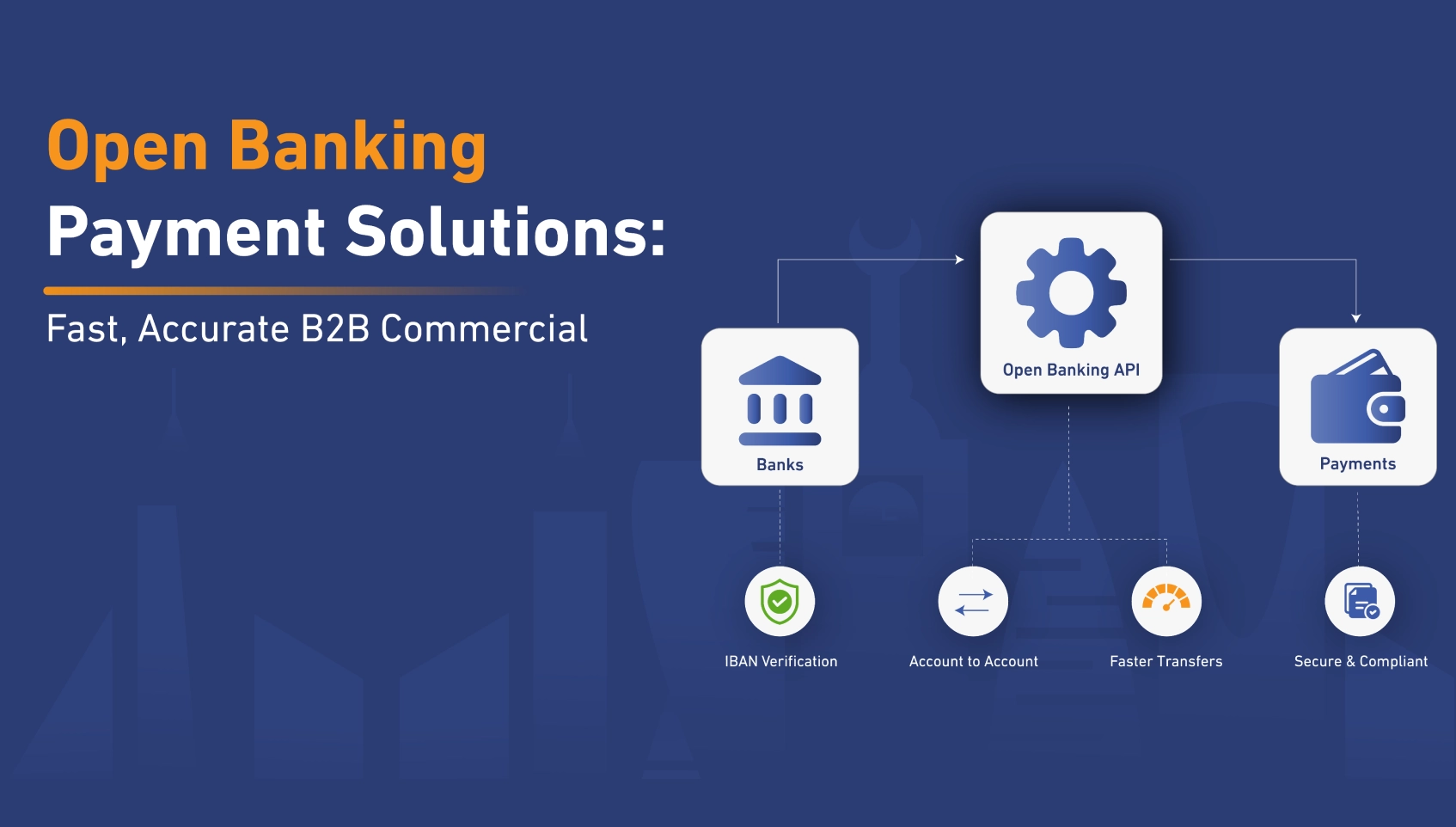
Open Banking Payment Solutions: Fast, Accurate B2B Commercial TransfersRead more
openBankingSecurityStandardsMainTitle
Open Banking Security Standards: Building Trust in Digital Financial OperationsRead more
bankReconciliationMainTitle
Bank Reconciliation: How to Reconcile Your Company's Accounts with Greater Efficiency?Read more
corporateCreditRatingMainTitle
Corporate Credit Rating: How Financial Data Supports Risk AssessmentRead more
Read more